Blog
CATEGORY: Best practiceResources
Email subject lines: 10 top tips for success

In an inbox brimming with emails demanding your readers’ attention, the subject line is your first, and sometimes your only, chance to make an impression. In our experience managing email campaigns, strong subject lines consistently outperform body content in driving engagement. So whether you are sending a marketing email, a newsletter, or a one-to-one message, the subject line can determine whether your email gets opened or ignored in today’s ever-crowded inboxes.
Why Subject Lines Matter
The subject line acts as a gateway to your content. No matter how valuable or well-written your email is, it will not deliver results if it is never opened. A strong subject line can:
Boost open rates and engagement
Set expectations for the reader
Build trust and credibility
Encourage action or clicks
On the flip side, a weak or misleading subject line can lead to low engagement, or worse, unsubscribes.
10 Top Tips for Subject Line Success
The following are subject line best practice tip to help you improve your email open rates.
1. Keep it short and clear
Aim for 6–10 words or under 50 characters to ensure visibility across devices. Many emails are opened on mobile devices, where long subject lines get cut off.
2. Make it relevant
Your subject line should match the content of your email. Misleading readers might get you an open, but it damages trust long term.
3. Create a sense of urgency
Phrases like “Last chance” or “Ending today” can encourage readers to act quickly but use them sparingly to avoid fatigue.
4. Personalise where possible
Including a name or relevant detail can make your email feel more tailored and engaging.
5. Ask a question
Questions spark curiosity and invite the reader to engage. For example: “Are you making this common mistake?”
6. Use action-oriented language
Start with verbs that inspire action, like “Discover,” “Learn,” “Boost,” or “Save.”
7. Spark curiosity
Give just enough information to intrigue the reader without revealing everything. This encourages clicks.
8. Avoid spam triggers
Overusing ALL CAPS, excessive punctuation (!!!), or words like “FREE” can send your email straight to spam folders.
9. Test and optimise
Run A/B tests on different subject lines to see what resonates best with your audience. Learn how to set up A/B split test campaigns in e-shot to continuously improve performance.
10. Align with your brand voice
Your subject line should reflect your tone, whether that is professional, friendly, or playful, so it feels consistent and authentic.
Bonus Tip: Using Emojis Wisely 😉
Emojis can help your subject line stand out in a busy inbox and add personality to your message. When used strategically, emojis can increase visibility and even boost open rates. However, moderation is key:
Use emojis that match your message and audience
Avoid overusing them, one is usually enough
Make sure they render correctly across devices
Do not rely on them to replace clear wording
A well-placed emoji can enhance your subject line, but it should complement your message, not distract from it.
Subject line examples
Here are some proven subject line examples you can take for inspiration, categorised by intent:
Curiosity-driven:
“You’re missing out on this…”
“This one mistake is costing you”
“We didn’t expect this result…”
Urgency-focused:
“Last chance to save 20%”
“Ends tonight: Don’t miss out”
“Final call before it’s gone”
Personalised:
“John, this is just for you”
“A quick idea for your business”
“We picked this for you”
Benefit-led:
“Boost your productivity in 10 minutes”
“Get better results with less effort”
“Save time with this simple trick”
Question-based:
“Are you making this common mistake?”
“Want better email results?”
“Ready to grow your audience?”
What makes an effective email subject line?
An effective email subject line is short, relevant, and aligned with the email content. Subject lines under 50 characters are more likely to display fully on mobile devices and achieve higher open rates.
High‑performing subject lines clearly signal value, use action‑oriented language, and avoid misleading claims. Personalisation and urgency can improve engagement when used accurately and sparingly.
Consistent testing is essential. Regular A/B testing helps identify which wording, tone, and structure resonate most with your audience while maintaining deliverability and trust.
Final Thoughts
A great subject line is both an art and a science. It requires creativity, clarity, and continuous testing. By applying these tips, you’ll improve your chances of standing out in those crowded inboxes and drive better results from your emails.
Remember: if your subject line doesn’t capture attention, the rest of your message may never be seen.
Last Updated: May 2026
You may also like these blogs

Social media Best practice Design
Social Share – how to grow your email audiences organically
April 17th, 2026 - Harry Thomas
Social sharing is a way of building communities and driving engagement online, allowing you to reach wider audiences organically. Social sharing...
5 ways email can be used to promote local elections
February 16th, 2026 - Harry Thomas
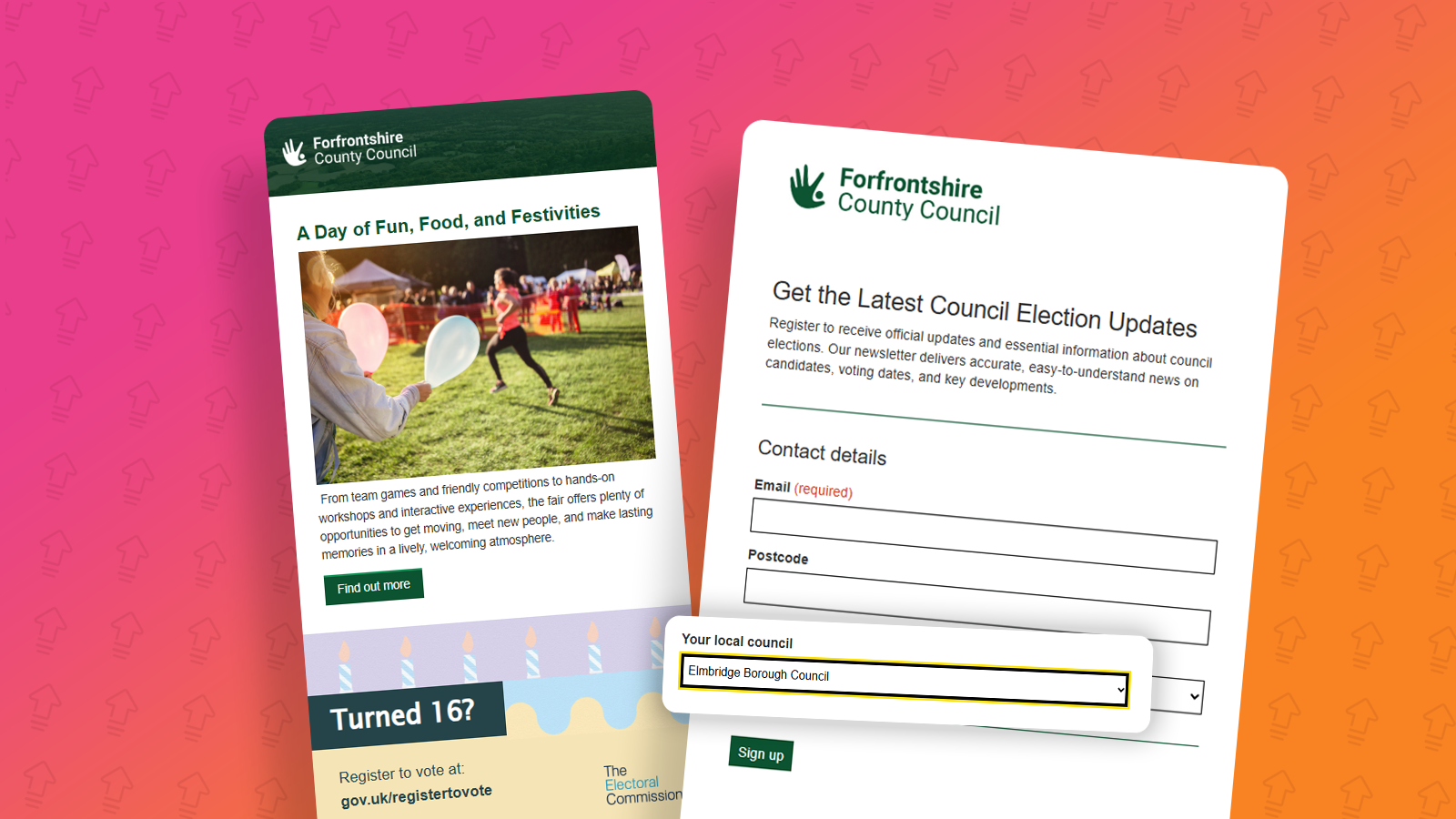
Local elections suffer without direct contact. During campaigns, crucial information doesn’t reach the right people, confusion grows, and turnout...
.png)
How Local Authorities use storytelling and email to drive real-world change
November 4th, 2025 - Harry Thomas
In the ever-crowded world of public sector communications, facts alone aren’t enough to capture attention—especially when you’re competing with the...
Solutions

Email Marketing
Create email campaigns and newsletters and manage end-to-end subscription processes with forms and preferences.

Marketing Automation
Create sophisticated automated campaigns for email and SMS combined.

Digital Communication
The comprehensive solution to manage and automate your digital communication across email, SMS, websites and landing pages.

Email marketing healthcheck
We are confident that we can help you, which is why we offer a free healthcheck to identify potential issues with your current programme and free advice on things that could be done to improve it.